
Educational Toys vs Regular Toys: The Key Difference

The biggest difference is purpose.
A regular toy may ask:
"How can I entertain the child?"
An educational toy may ask:
"What can the child discover or develop while playing?"
For example, a simple colorful block can be fun to stack. A building set with different shapes, sizes, and challenges can additionally encourage children to think about balance, patterns, structures, and problem-solving.
1. Educational Toys Encourage Active Learning
Educational toys encourage children to do something, rather than simply watch or receive stimulation.
Children may need to:
-
Match objects
-
Solve puzzles
-
Sort colors and shapes
-
Count objects
-
Follow patterns
-
Experiment with different solutions
This type of hands-on learning can make concepts easier to understand.
2. Regular Toys Can Encourage Imagination Too
It's important not to assume that regular toys have no educational value.
A simple toy can encourage creativity when children use it for:
-
Storytelling
-
Role play
-
Social interaction
-
Imaginative games
For example, a toy kitchen can help a child recreate everyday experiences while developing communication and social skills.
The distinction is that educational toys usually have a more deliberate learning focus.
What Skills Do Educational Toys Develop?
One of the biggest advantages of educational toys is their ability to support multiple areas of child development.
🧠 Problem-Solving Skills
Puzzles, construction sets, sorting games, and logic toys encourage children to find solutions independently.
Children learn that problems can have different solutions and that trying again is part of learning.
✋ Fine Motor Skills
Toys involving buttons, pegs, threading, stacking, connecting, or placing objects help children practice hand and finger movements.
These skills can later support everyday activities such as:
-
Holding a pencil
-
Writing
-
Using scissors
-
Buttoning clothes
-
Handling classroom materials
🔢 Early Math Skills
Counting toys, number puzzles, sorting games, and pattern activities can introduce mathematical concepts through hands-on experiences.
Instead of simply memorizing numbers, children can learn about:
-
Quantity
-
Counting
-
Shapes
-
Patterns
-
Classification
-
Basic addition and subtraction
🎨 Creativity and Imagination
Building blocks, art materials, construction toys, and open-ended activities allow children to create something of their own.
There may not be one "correct" answer, which encourages experimentation and creative thinking.
🗣️ Communication and Social Skills
Board games, role-play toys, storytelling activities, and cooperative games encourage children to communicate with others.
They can learn to:
-
Take turns
-
Explain ideas
-
Listen
-
Negotiate
-
Express emotions
These skills are important both inside and outside the classroom.
Educational Toys Don't Have to Be Complicated
A common misconception is that an educational toy needs to be electronic, expensive, or highly advanced.
That's not necessarily true.
Some of the most useful learning toys for kids can be surprisingly simple:
-
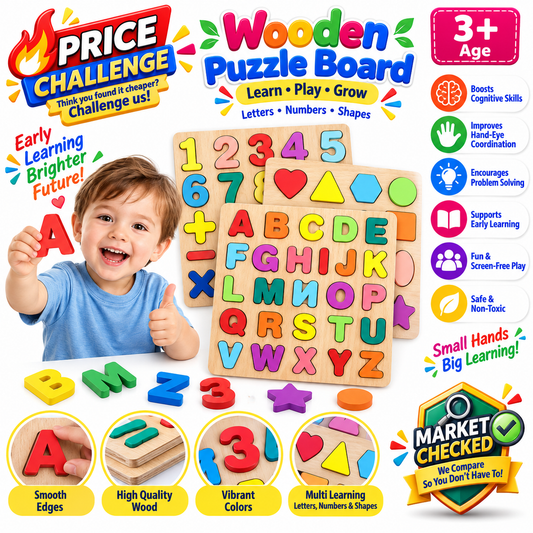
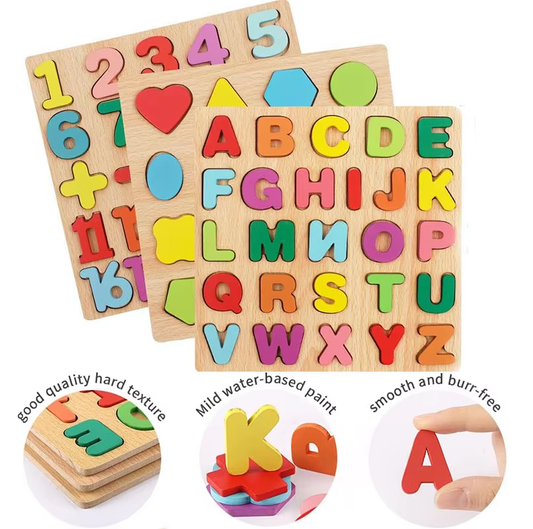
Wooden puzzles
-
Counting pegs
-
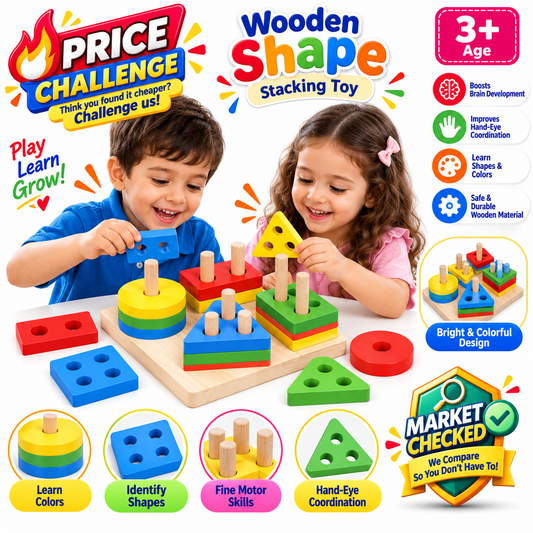
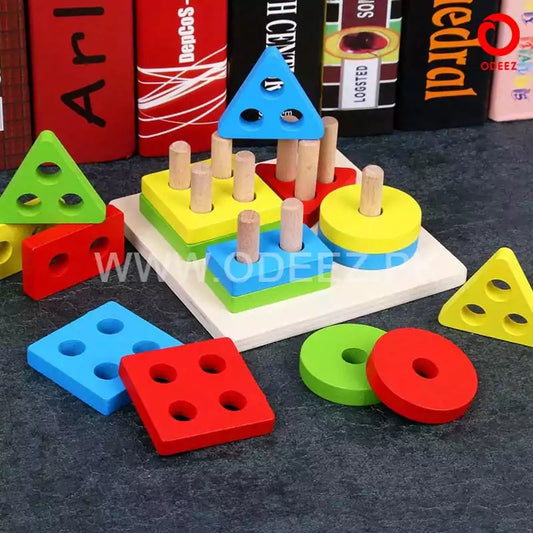
Shape sorters
-
Building blocks
-
Matching cards
-
Abacus
-
Threading activities
What matters is how the toy encourages the child to interact and think.
How Parents Can Use Educational Toys at Home
Buying an educational toy is only the beginning. The way parents introduce and use it can make the experience much more meaningful.
Try these simple activities:
-
Turn counting into a daily game
Ask your child to count blocks, cars, balls, or household objects. -
Create small challenges
Ask them to build the tallest tower or find a particular shape. -
Ask questions instead of giving answers
Try asking, "What do you think will happen?" or "Can you find another way?" -
Let children experiment
Don't immediately correct every mistake. -
Connect toys with real life
Use sorting toys to discuss colors, sizes, fruits, animals, or household objects.
This transforms ordinary playtime into learning through play.
Are Educational Toys Better Than Regular Toys?
There isn't necessarily a single type of toy that is best for every child.
Educational and regular toys can both have value depending on the child's age, interests, and developmental needs.
The important question is:
What opportunities does this toy give my child?
A good toy should ideally encourage children to interact, explore, imagine, communicate, or solve problems.
What Should Parents Look for When Buying Educational Toys?
When shopping for educational toys in Pakistan, consider the following:
Look for toys that:
-
Match your child's age and ability
-
Encourage hands-on interaction
-
Develop a specific skill
-
Allow repeated use
-
Encourage creativity
-
Are durable and safe
-
Can be played with independently or together
-
Offer increasing levels of challenge
Avoid choosing a toy simply because its packaging says "educational."
The actual play experience matters more than the label.
Educational Toys and Screen-Free Learning
For parents trying to reduce children's screen time, educational toys can provide a meaningful alternative.
Instead of spending free time watching videos, children can:
-
Build
-
Draw
-
Solve
-
Sort
-
Count
-
Create
-
Imagine
-
Experiment
This makes screen-free educational activities a practical part of a healthy daily routine.
Choosing Toys Based on Your Child's Needs
Every child learns differently. Instead of buying toys simply because they are popular, consider the skills your child is currently developing.
If your child needs more focus:
Try puzzles, matching games, and concentration activities.
If your child enjoys creating:
Try building sets, art materials, and open-ended toys.
If your child is learning numbers:
Try counting toys, abacus activities, and number puzzles.
If your child needs fine motor practice:
Try threading, peg boards, stacking, and hands-on activity toys.
If your child enjoys social play:
Try board games, role-play sets, and cooperative activities.
This approach makes toy shopping more purposeful.
The Real Value of an Educational Toy
The value of a toy isn't simply its price.
A toy that costs more isn't automatically better, and an inexpensive toy isn't automatically less useful.
The real value comes from how often the child plays with it, what they learn from it, and how many skills it encourages.
A good educational toy can provide hours of repeated learning through different challenges and activities.
Educational Toys Are an Investment in Skills
When parents purchase educational toys, they aren't simply buying another item for the toy box.
They are creating opportunities for children to practice:
-
Thinking independently
-
Communicating
-
Creating
-
Concentrating
-
Trying again after mistakes
These skills can continue to benefit children long after they stop playing with the toy.
Final Thoughts: Choose Toys With Purpose
The difference between educational toys and regular toys isn't simply about labels, price, or appearance. It's about the experience and opportunities a toy creates for a child.
Regular toys can provide entertainment, imagination, and social play, while educational toys are intentionally designed to support specific developmental and learning goals. Both can have a place in a child's play environment.
For Pakistani parents, the smartest approach is to choose quality educational toys that match their child's interests, abilities, and learning needs.
Instead of asking only:
"Will my child enjoy this toy?"
also ask:
"What can my child learn, practice, create, or discover with it?"
When play is enjoyable and purposeful at the same time, children don't feel like they're studying—they simply feel like they're playing.
And that's where meaningful learning begins.
