
Wooden Educational Toys: Why Parents Should Consider Them for Their Children's Learning and Development

Wooden Educational Toys: Why Parents Should Consider Them for Their Children's Learning and Development
In a world filled with electronic gadgets, mobile games, and plastic toys, wooden educational toys are making a remarkable comeback. More parents are recognizing the value of simple, thoughtfully designed toys that encourage children to explore, create, and learn through hands-on experiences.
Unlike toys that rely heavily on lights, sounds, and electronic features, wooden learning toys encourage imagination, problem-solving, creativity, and independent play. They offer children opportunities to develop essential skills while enjoying meaningful playtime.
For Pakistani parents looking for durable, safe, and engaging educational toys in Pakistan, wooden toys can be an excellent addition to their children's learning environment.
What Are Wooden Educational Toys?
Wooden educational toys are learning and play materials primarily made from wood and designed to support children's physical, cognitive, and creative development.
They come in various shapes, designs, and learning categories, helping children develop different skills through practical activities.
Some popular examples include:
-
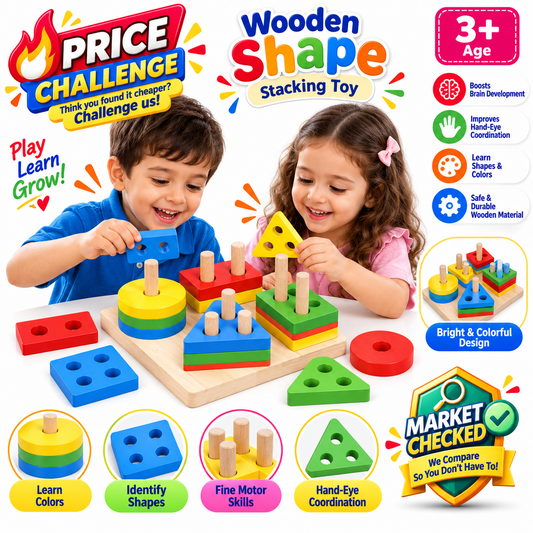
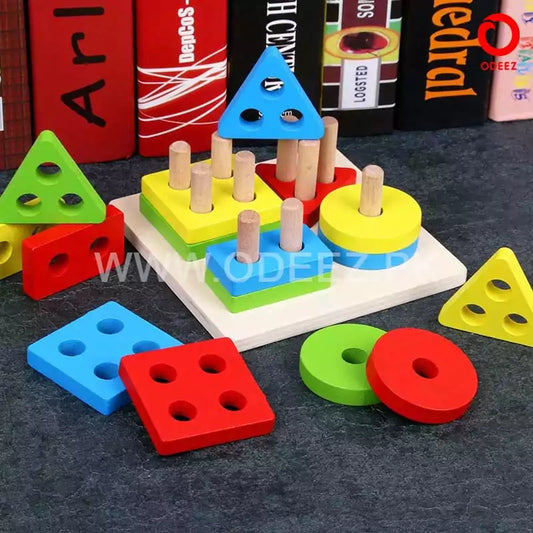
Wooden puzzles and shape sorters
-
Counting boards and abacus
-
Wooden building blocks
-
Number and alphabet boards
-
Stacking and balancing toys
-
Montessori learning boards
-
Sorting and matching activities
-
Wooden threading and fine motor toys
These toys combine simple designs with meaningful learning experiences, making them suitable for different stages of childhood.
Why Are Wooden Educational Toys Becoming Popular?
Modern parents are becoming more thoughtful about the toys they bring home. Instead of choosing toys based only on appearance or entertainment value, many are looking for products that offer long-term developmental benefits.
Here are some reasons behind the growing interest in wooden learning toys.
1. Encourages Hands-On Learning
Children learn best when they can touch, explore, experiment, and interact with their surroundings.
Wooden educational toys encourage active participation rather than passive entertainment.
For example, a wooden counting board allows children to physically move pegs, count objects, recognize numbers, and understand basic mathematical concepts.
This makes learning more practical and enjoyable.
2. Supports Screen-Free Play
Excessive screen time is a growing concern among parents.
Wooden toys offer an engaging alternative to mobile phones and tablets by encouraging children to participate in activities that involve thinking, movement, and creativity.
They help children spend more time:
-
Building and constructing
-
Solving puzzles
-
Sorting shapes and colors
-
Exploring creative activities
Introducing wooden learning toys can make screen-free play a more enjoyable part of everyday family life.
3. Durable and Long-Lasting
One of the biggest advantages of wooden toys is their durability.
Unlike some lightweight plastic toys that may break easily, well-made wooden toys can withstand regular use when properly maintained.
Benefits include:
-
Strong and sturdy construction
-
Long-lasting play value
-
Reusable learning opportunities
-
Potential to be passed down to younger siblings
This makes quality wooden educational toys a worthwhile long-term purchase.
4. Simple Designs Encourage Creativity
Many electronic toys have predefined sounds, movements, and instructions.
Wooden toys, on the other hand, often leave more room for children to decide how they want to play.
A set of wooden blocks, for example, can become a tower, a house, a bridge, or an entirely new creation.
This encourages open-ended play, imagination, and independent thinking.
7 Important Benefits of Wooden Educational Toys for Children
Wooden toys are not just about their appearance or material. Their real value lies in the learning opportunities they provide.
1. Develops Fine Motor Skills
Many wooden learning toys require children to pick, place, stack, thread, and arrange small objects.
These activities help strengthen hand and finger coordination.
They support skills such as:
-
Holding pencils
-
Writing readiness
-
Finger control
-
Object manipulation
Threading boards, peg toys, and wooden shape sorters are excellent examples.
2. Improves Problem-Solving Abilities
Puzzles, stacking games, and construction toys encourage children to think independently.
When a piece doesn't fit or a tower falls, children learn to experiment with different solutions.
This develops logical thinking, patience, and problem-solving abilities.
3. Encourages Creativity and Imagination
Open-ended wooden toys allow children to create their own activities rather than follow a single instruction.
Building blocks, wooden construction sets, and pretend-play toys encourage children to explore new ideas and express their imagination.
4. Builds Early Mathematical Skills
Wooden educational toys can introduce mathematical concepts through practical activities.
For example, an abacus or counting board helps children understand:
-
Number recognition
-
Counting
-
Addition and subtraction
-
Patterns
-
Sorting and classification
-
Basic mathematical relationships
Children understand numbers more meaningfully when they can physically interact with objects.
5. Improves Concentration and Patience
Completing a puzzle, arranging blocks, or matching different shapes requires attention and persistence.
Regular engagement with these activities gives children opportunities to practice focusing on one task at a time.
6. Supports Independent Learning
Many wooden Montessori toys are designed to encourage children to explore and discover solutions independently.
Children can repeat activities, identify mistakes, and gradually improve without constantly depending on adults.
This helps develop confidence and independence.
7. Encourages Social Interaction
Wooden board games, building sets, and group activities create opportunities for children to play together.
They learn to:
-
Share toys
-
Take turns
-
Communicate ideas
-
Work together
-
Respect different opinions
These are valuable skills for school and everyday life.
Popular Types of Wooden Educational Toys Parents Should Consider
Choosing the right toy depends on the skills and interests your child wants to explore.
Here are some useful categories worth considering.
1. Wooden Puzzles and Shape Sorters
These toys introduce children to shapes, patterns, colors, and spatial relationships.
They help develop:
-
Visual recognition
-
Logical thinking
-
Hand-eye coordination
They are excellent options for children beginning their learning journey.
2. Wooden Counting Toys and Abacus
Counting toys make early mathematics more interactive.
Children can move beads, count pegs, group objects, and practice simple calculations.
These toys are especially useful for parents looking for hands-on math learning toys.
3. Wooden Building Blocks
Building blocks are among the most versatile educational toys.
Children can create different structures while exploring:
-
Balance
-
Shapes
-
Sizes
-
Spatial awareness
-
Creativity
-
Basic engineering concepts
Their open-ended nature makes them useful for repeated play.
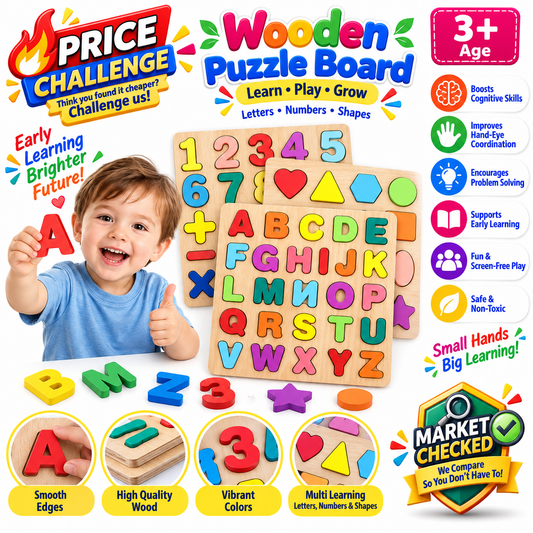
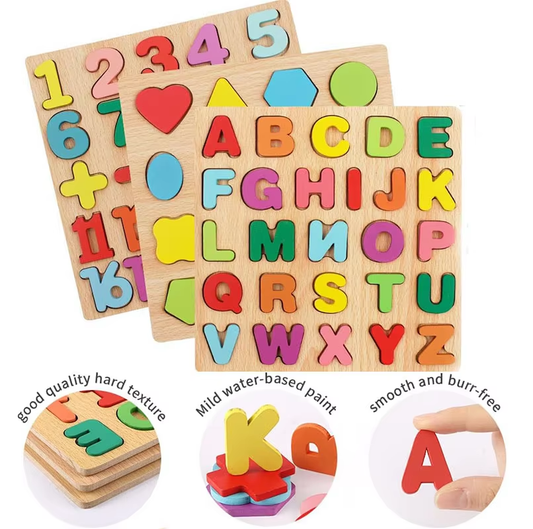
4. Wooden Montessori Learning Boards
Montessori learning boards combine multiple practical activities into one learning experience.
Depending on their design, they may include:
-
Alphabet recognition
-
Number learning
-
Shape matching
-
Counting activities
-
Fine motor exercises
-
Pattern recognition
They can help children practice different skills through structured, hands-on activities.
5. Wooden Sorting and Matching Toys
These toys encourage children to identify similarities and differences between objects.
Sorting activities can involve colors, sizes, shapes, and patterns.
They support early classification skills, visual recognition, and logical thinking.
How Parents Can Use Wooden Educational Toys at Home
You don't need a classroom or complicated teaching methods to make wooden toys educational.
A few simple activities can turn everyday playtime into meaningful learning.
Try These Activities at Home:
1. Counting Challenge
Give your child a wooden counting board and ask them to place five pegs in a row. Gradually introduce simple addition and subtraction questions.
2. Build a Tower
Provide wooden blocks and challenge your child to build the tallest possible tower without making it fall.
3. Shape Hunt
Use wooden shape sorters and ask your child to identify similar shapes around the house.
4. Color Sorting Game
Give your child different colored wooden pieces and ask them to group objects by color.
5. Storytelling Through Blocks
Ask your child to build a house, school, or park using wooden blocks and create a story around it.
These activities encourage children to learn naturally without feeling pressured.
Wooden Toys vs Plastic Toys: Which Is Better?
Both wooden and plastic toys can offer educational value. The better choice depends on the toy's quality, safety, design, and intended use.
|
Feature |
Wooden Toys |
Plastic Toys |
|
Durability |
Often sturdy and long-lasting |
Varies by quality |
|
Learning Style |
Often encourages hands-on and open-ended play |
Can offer structured or interactive play |
|
Design |
Usually simple and tactile |
Available in many designs and features |
|
Creativity |
Often encourages imagination |
Depends on the toy |
|
Maintenance |
Requires care against moisture |
Often easier to wash |
|
Sustainability |
Can be a more sustainable choice when responsibly sourced |
Depends on material and recyclability |
The important point: Wooden toys are not automatically better than every plastic toy. Parents should prioritize safety, quality, age suitability, and developmental value when making a purchase.
Are Wooden Educational Toys Safe for Children?
Safety should always be a priority when choosing toys.
Before purchasing wooden toys, parents should look for:
-
Smooth, properly finished surfaces
-
No sharp edges or splinters
-
Non-toxic, child-safe paints and finishes
-
Strongly attached components
-
Appropriate piece sizes for the child's age
-
Clear age recommendations
For younger children, avoid toys containing small detachable parts that could present a choking hazard.
Always supervise children according to the toy's age recommendations.
Why Locally Made Wooden Educational Toys Are Worth Exploring in Pakistan
Pakistan has growing opportunities for locally manufactured educational products, including wooden learning boards and Montessori-inspired materials.
Choosing locally made products can support domestic manufacturing while providing parents with practical learning resources.
Some advantages include:
-
Supporting local manufacturers
-
Access to practical educational designs
-
Encouraging locally developed learning products
-
Greater availability of selected educational activities
Parents should still evaluate each product based on its craftsmanship, material quality, finish, and safety.
How to Choose the Right Wooden Educational Toy for Your Child
Not every toy is suitable for every child. The best choice depends on their age, interests, abilities, and current developmental needs.
Consider these factors before purchasing:
For better concentration: Choose puzzles, matching games, and sorting activities.
For mathematical development: Explore counting boards, abacus, and number-learning toys.
For creativity: Choose wooden blocks and construction sets.
For fine motor development: Look for threading boards, peg toys, and shape sorters.
For independent learning: Consider Montessori-inspired activity boards and practical learning toys.
Always select age-appropriate products that provide an enjoyable level of challenge without overwhelming the child.
Final Thoughts: Small Toys, Meaningful Learning
Wooden educational toys offer much more than simple entertainment. They create opportunities for children to explore, experiment, develop new skills, and understand the world around them.
From improving fine motor coordination and mathematical understanding to encouraging creativity, concentration, and independent thinking, these toys can play a meaningful role in childhood development.
For Pakistani parents looking to invest in quality educational toys, wooden learning products are worth considering because they combine hands-on experiences, durability, and purposeful play.
Before purchasing your child's next toy, think beyond its appearance and entertainment value.
Look for something that encourages your child to:
-
Think independently
-
Explore new ideas
-
Solve problems
-
Create something meaningful
-
Learn through experience
Because the best toys don't just keep children busy — they give children opportunities to grow, discover, and learn.
